Sri Lanka measures around 430 kilometres from north to south, which fools a lot of first-time visitors into planning too much. Roads are narrow and busy, mountain routes climb slowly, and a distance that looks like a two-hour drive often takes four. Weather is the second surprise: two monsoons hit opposite coasts at different times of year, so it is almost always sunny somewhere and raining somewhere else on the same date.
Get those two things right and the island is one of the easiest places in Asia to travel independently. Get them wrong and you spend the trip in a vehicle, watching rain.
Sri Lanka at a glance
| Commercial capital | Colombo (Sri Jayawardenepura Kotte is the administrative capital) |
|---|---|
| Main airport | Bandaranaike International Airport (CMB), around 35 km north of Colombo |
| Currency | Sri Lankan rupee (LKR) |
| Languages | Sinhala and Tamil are official, English widely used in tourism |
| Time zone | UTC+5:30, no daylight saving |
| Power | 230 V, 50 Hz, plug types D, M and G |
| Driving | Left-hand side |
| Sensible trip length | 10 to 14 nights for one coast plus the hill country |
| Emergency numbers | Police 119, ambulance 1990, tourist helpline 1912 |
When to visit Sri Lanka
There is no single best month. The southwest monsoon brings rain to the west and south coasts and the hill country roughly from May to September. The northeast monsoon does the same to the east and north roughly from November to February. The inter-monsoon periods, March to April and October to early November, can produce afternoon storms almost anywhere.
That leaves two clear windows. December to March suits the south and west, Galle, Mirissa and the tea country, and it is the busiest and priciest stretch of the year, especially around Christmas. May to September suits Trincomalee, Nilaveli and Arugam Bay in the east, which stay quieter and cheaper because fewer European travellers plan around them. April and October are the gamble months: lower prices, empty beaches, and a real chance of a wet week. If your dates fall there, commit to one coast rather than crossing the island, and treat the hill country as the rain-tolerant option, since Ella and Nuwara Eliya are misty and cool in most seasons anyway.
Visa and entry requirements
Nearly every visitor needs an Electronic Travel Authorization, the ETA, before arriving. Apply on the official government site at eta.gov.lk and nowhere else, because agents charge for the same form and some are outright scams.
Since 25 May 2026 the tourist ETA has been free for a 30-day stay, with double entry, for nationals of 40 countries, including Sweden, Norway, Denmark, Finland, Germany, the Netherlands, France, Italy, Spain, Poland, Turkey, the United Kingdom, the United States, Canada and Australia. Everyone else applies through the same system and pays the standard fee. The approval is required either way, so apply before you fly. Your passport should be valid for at least six months beyond arrival, and immigration can ask for onward travel and an address, so keep both reachable offline. Extensions beyond 30 days are applied for inside the country, and they are paid.
Entry rules change with little notice. Confirm current requirements on eta.gov.lk and with your own foreign ministry shortly before you travel.
Getting to Sri Lanka
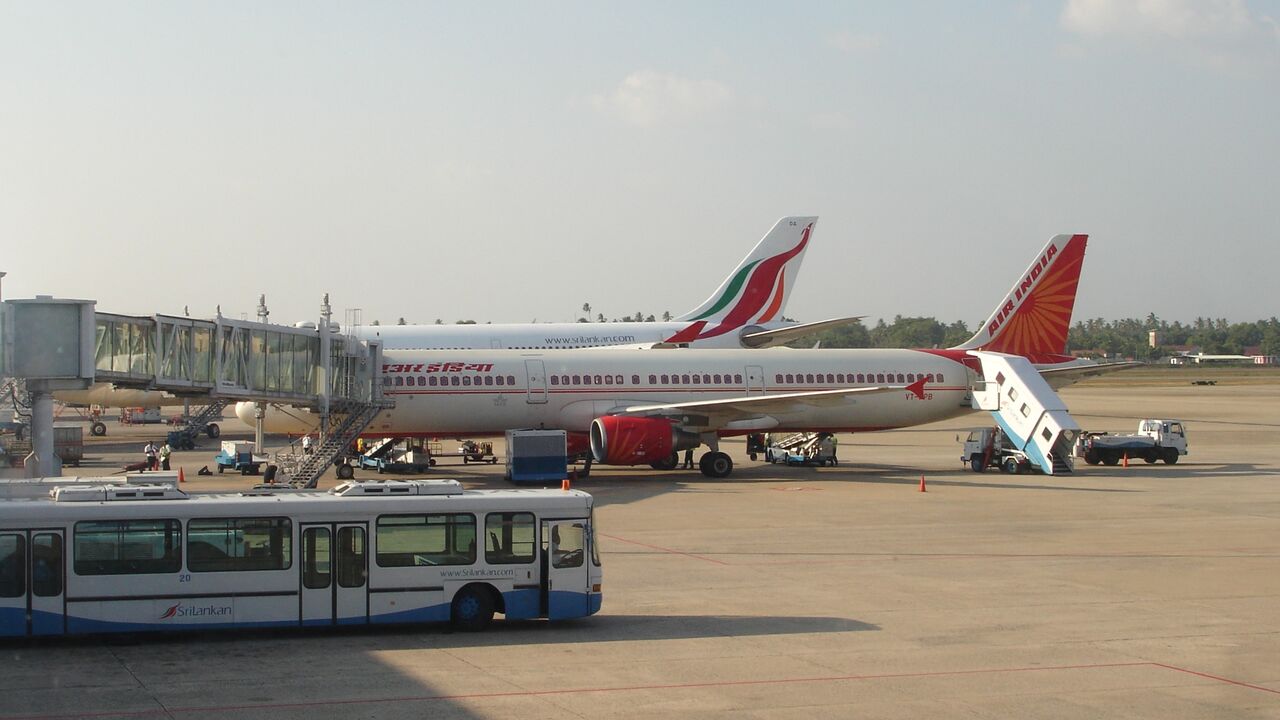
Practically all international arrivals land at Bandaranaike International Airport (CMB), since Mattala in the south handles very little traffic. From Sweden and most of Europe, expect at least one connection, usually through the Gulf, Turkey, or an Indian or Southeast Asian hub. Compare total journey time and layover length, not just the fare: a ticket that saves a little but adds a nine-hour transit and a 2 a.m. arrival costs you a day and often an unplanned hotel night.
Two checks before booking. Is the itinerary one ticket or two separate bookings? On one ticket the airline rebooks you when the first leg runs late; on separate tickets that is your problem, so leave at least four hours between them. And compare baggage rules, because allowances differ between carriers on a connecting route and the strictest one usually wins. Full routings for your dates are searchable through Holidair flight search.
Arrival is easy. Immigration is usually quick with an approved ETA, and the arrivals hall has ATMs, telecom counters and taxis at any hour. Negombo is 15 minutes away and makes a sensible first night; Colombo is about an hour by expressway. If you would rather have a driver waiting, book an airport transfer in advance.
Getting around Sri Lanka
Trains are the best value and the most enjoyable way to cover distance. The hill country line from Kandy through Nanu Oya and Ella to Badulla is slow and spectacular, and the southern coastal line runs beside the water for much of the way. Reserved seats in observation, air-conditioned and second class carriages can be booked on the official Sri Lanka Railways reservation site up to 30 days ahead, five seats at a time, with passport details required. Popular hill country departures sell out weeks early in high season. Unreserved carriages are always available if you accept standing.
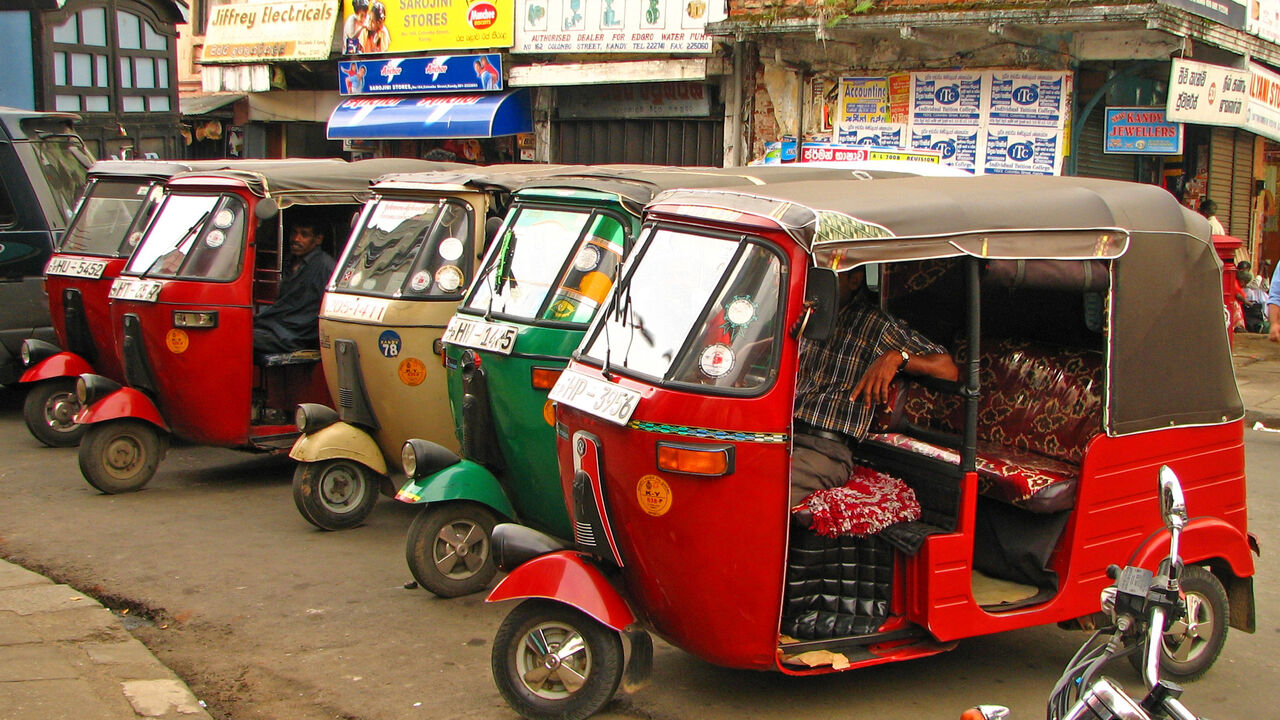
Buses reach everywhere, cost very little and stop constantly, which makes them good for short hops and awkward with luggage. A car with a driver costs many times more but removes all timetable work, and for a group it can be reasonable per person; agree the daily rate, the route, and whether fuel and the driver's accommodation are included. In towns, tuk-tuks cover short distances, many have meters, and ride-hailing apps work well in Colombo, Kandy, Galle and Negombo. Domestic flights and seaplanes serve a few routes and only make sense if you are short of days. Driving yourself is the weakest option for a first visit: traffic is assertive and foreign licences need a local recognition permit.
Whatever you pick, budget time generously. Colombo to Kandy is roughly 120 kilometres and takes three to four hours. Kandy to Ella by train is about seven. Those figures are normal, not bad luck.
Money, cards and ATMs
The currency is the Sri Lankan rupee. Hotels, larger restaurants, supermarkets and tour operators generally take cards, but cash still runs daily life: tuk-tuks, buses, market stalls, small guesthouses and minor entrance fees. Carry more small notes than feels necessary, because a 5,000-rupee note is awkward to break for a short ride.
ATMs are easy to find in cities and tourist towns and thinner in rural areas, so withdraw before long stretches inland. Machines usually add their own fee on top of your bank's, which makes fewer, larger withdrawals cheaper. If a terminal offers to charge you in euros, kronor or pounds rather than rupees, decline: that is dynamic currency conversion and the rate is nearly always worse. Change money at banks, airport counters or your hotel, and check the current rate the week you travel rather than trusting a printed figure.
What a trip actually costs
Sri Lanka is affordable by European standards, but transport is the biggest variable. A couple travelling by train and tuk-tuk spends a fraction of what the same couple spends on a car and driver for two weeks. Food follows the same pattern: rice and curry at a local place costs very little and is often the best meal of the day, while tourist restaurants in Galle or Ella charge several times more.
Entrance fees are where budgets quietly break. Major archaeological sites and national parks use foreign-visitor pricing, and each can cost more than a night in a guesthouse, so choose the two or three you genuinely want. Rather than quote figures that go stale, check live prices for your dates: accommodation across the island is searchable through Holidair hotel search, and park and heritage fees are published by the managing authorities.
SIM cards, eSIMs and staying online
Mobile data is cheap and coverage is good along the coasts, in hill country towns and on main roads, with gaps in parks and remote interior areas. Local operators sell tourist prepaid packages with generous data, and the official counters in the CMB arrivals hall are the simplest place to buy one. Bring your passport, since SIM registration is mandatory.
If you would rather land already connected, an eSIM skips the queue and works on arrival, provided your phone supports it and is not carrier-locked. You can set up a travel eSIM before departure. Either way, download offline maps first and save your ETA approval, passport and insurance details somewhere reachable without a signal. Hotel and café Wi-Fi is widespread but often slow in the evening.
Health preparation and insurance
Take travel insurance that covers medical treatment and evacuation, and check it covers what you plan to do, such as diving, surfing or riding a motorbike. Private hospitals in Colombo and Kandy are good and expect payment or an insurer guarantee, so keep your policy number handy. Check vaccination and malaria guidance with a travel clinic or official health authority several weeks ahead rather than relying on any guide.
Dengue is present year round and rises after rain, so daytime mosquito protection matters more than people expect: repellent, covered arms in the evening, screens or a fan in the room. Bring prescription medicine in its original packaging with a copy of the prescription. Do not drink tap water. Heat and humidity derail more itineraries than anything exotic, so drink more than you think you need and treat midday as slow time.
Safety and the problems people actually meet
Most trips pass without incident and the realistic risks are ordinary ones. Roads are the main one: overtaking on blind bends is normal, pedestrian space is limited, and if you ride a scooter, wear a helmet and confirm your insurance covers it. Agree tuk-tuk fares before getting in. Petty theft happens in crowded places and on buses, so keep a card and some cash separate. The usual scams are mild: a driver who suggests a gem dealer, an unofficial guide at a temple gate, a sudden claim that a site is closed. A polite refusal ends nearly all of them.
The sea deserves respect. Currents on parts of both coasts are strong and many beaches have no lifeguard, so ask locally which are safe for swimming in the current season. On safari, stay in the vehicle and keep your distance from elephants, which also use some rural roads at dusk. Leave stray dogs alone. At monsoon peaks, flooding and landslides can close roads and disrupt trains, and occasional demonstrations or local restrictions can affect travel. Read your own government's advice, such as the UK FCDO advice for Sri Lanka, before booking and again before departure.
Local customs and travelling respectfully
Buddhism is central to daily life and temple etiquette is taken seriously. Cover shoulders and knees at religious sites, remove shoes and hats before entering, and carry a scarf and thin socks, because stone floors get very hot. Never pose with your back to a Buddha statue, and do not touch or climb on images. Visible Buddha tattoos have caused travellers real problems, including at immigration, so cover them.
Ask before photographing people, especially monks, and accept no as an answer. Dress modestly away from beach resorts, since swimwear belongs on the beach rather than in towns or on buses. Buying tea, spices or crafts directly from producers puts money where it does more good than a souvenir shop, and if you visit a village or a school, go with someone who has a real relationship there rather than treating daily life as an attraction.
What to pack
- Light, breathable clothing plus one long-sleeved layer for evenings and cold buses
- Temple-appropriate clothing covering shoulders and knees, with a scarf and thin socks
- A light rain jacket or compact umbrella, whatever the season
- Shoes you can walk and climb steps in, plus sandals
- High-factor sun cream, sunglasses and a hat
- Mosquito repellent that actually works
- A refillable water bottle, ideally with a filter
- A type D, M or G plug adapter and a power bank
- Prescription medicine in original packaging with a copy of the prescription, rehydration sachets and basic first aid
- Offline copies of your ETA approval, passport, insurance and bookings
Before you travel: a short checklist
- Apply for the ETA on eta.gov.lk and save the approval offline
- Check your passport is valid at least six months beyond arrival
- Confirm entry rules and travel advice with your own foreign ministry
- Choose your coast from the monsoon dates, not from photographs
- Book long-distance trains as soon as the 30-day window opens
- Buy travel insurance and read what it excludes
- Check vaccination and malaria guidance with a clinic
- Arrange mobile data: an eSIM in advance or a SIM at the airport
- Tell your bank you are travelling and note your card's ATM fees
- Download offline maps and save your first night's address
Frequently asked questions
How many days do you need in Sri Lanka?
Ten to fourteen nights is the comfortable minimum for one coast plus the hill country, because journeys take longer than the map suggests. With a week, stay in one region and skip the cross-island loop.
Is Sri Lanka expensive to visit?
It is inexpensive with trains, buses, guesthouses and local food. Costs climb sharply with private drivers, resort hotels and the foreign-visitor entrance fees at major sites and national parks, which are the items most likely to break a budget.
Do tourists need a visa for Sri Lanka?
Almost all visitors need an Electronic Travel Authorization before arrival, applied for at eta.gov.lk. Since May 2026 it has been free for 30 days for nationals of 40 countries, including Sweden, Norway, Denmark, Finland, Germany and the United Kingdom, but the approval is still required when there is nothing to pay.
Can you use bank cards in Sri Lanka?
Yes in hotels, larger restaurants, supermarkets and organised tours. Tuk-tuks, buses, markets and small guesthouses are cash, so keep rupees in small notes and decline any offer to be charged in your home currency.
Is tap water safe to drink in Sri Lanka?
No. Use bottled or filtered water, including for brushing your teeth if your stomach is sensitive. A filter bottle is cheaper and produces far less plastic over two weeks.
Can you travel around Sri Lanka without hiring a driver?
Easily. Trains cover Colombo, the south coast, Kandy and the hill country, buses fill the gaps, and tuk-tuks or ride-hailing handle short distances. A driver buys convenience and time, not access.
When is the best time to visit Sri Lanka?
December to March for the south and west coasts and the tea country, May to September for the east around Trincomalee and Arugam Bay. No month is good everywhere, so match the coast to your dates.
Sources
- Sri Lanka Electronic Travel Authorization, official ETA system
- Department of Immigration and Emigration, visa information
- Sri Lanka Railways online seat reservation
- UK Foreign, Commonwealth and Development Office advice for Sri Lanka
- Sri Lanka Tourism Development Authority, tourist helpline 1912
Checked in September 2026 against the sources above, including Sri Lanka Police (119) and the 1990 Suwa Seriya ambulance service. Visa rules, safety guidance, fees and timetables change, so verify anything time sensitive before you book.