Thailand is one of the easiest long-haul countries to travel in and one of the easiest to plan badly. Flights are frequent, domestic transport is cheap and the tourism industry is experienced, which is exactly what tempts people into a two-week trip with six destinations, four internal flights and a ferry booked ninety minutes before a connecting flight.
The country is also bigger than it looks: Bangkok to Chiang Mai is roughly 700 kilometres, Bangkok to Phuket about the same again the other way, and the southern islands sit on two coastlines with two different weather patterns. This is the overview guide to the decisions that follow, with the practical Thailand travel tips that keep a holiday out of departure halls.
Best Places to Visit in Thailand
Most first trips draw from the same shortlist, because the transport links are good and the places are genuinely different. Here is what each one offers and roughly how long it deserves.
Bangkok
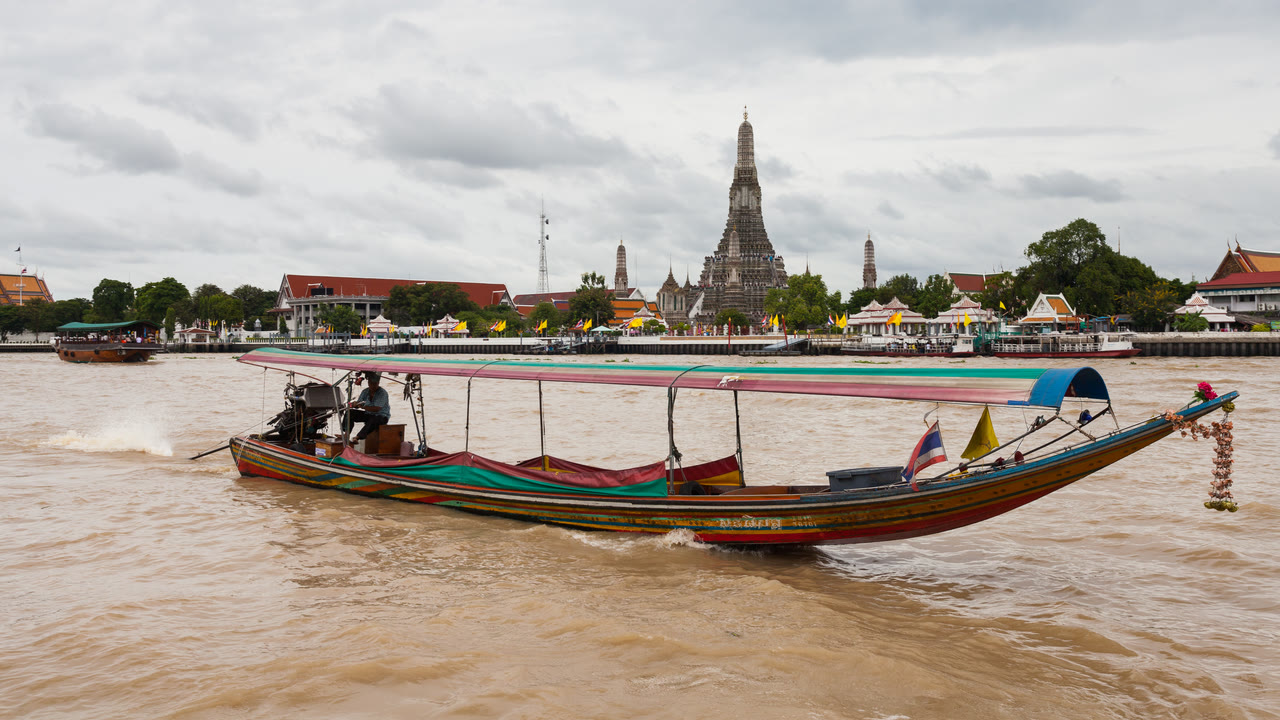
Bangkok is treated as an airport with a city attached far too often. Give it two or three nights and it becomes a dense, river-shaped city with some of the best eating in Asia: the Grand Palace and Wat Pho on the Chao Phraya, Wat Arun across the water on a cheap ferry, Yaowarat for street food after dark. Use the Skytrain and metro rather than taxis at rush hour. Long-haul flights land at Suvarnabhumi (BKK) while most low-cost domestic flights leave from Don Mueang (DMK), so those first nights double as your buffer against long-haul delays.
Search and compare flight options for your Thailand trip with Holidair
Chiang Mai
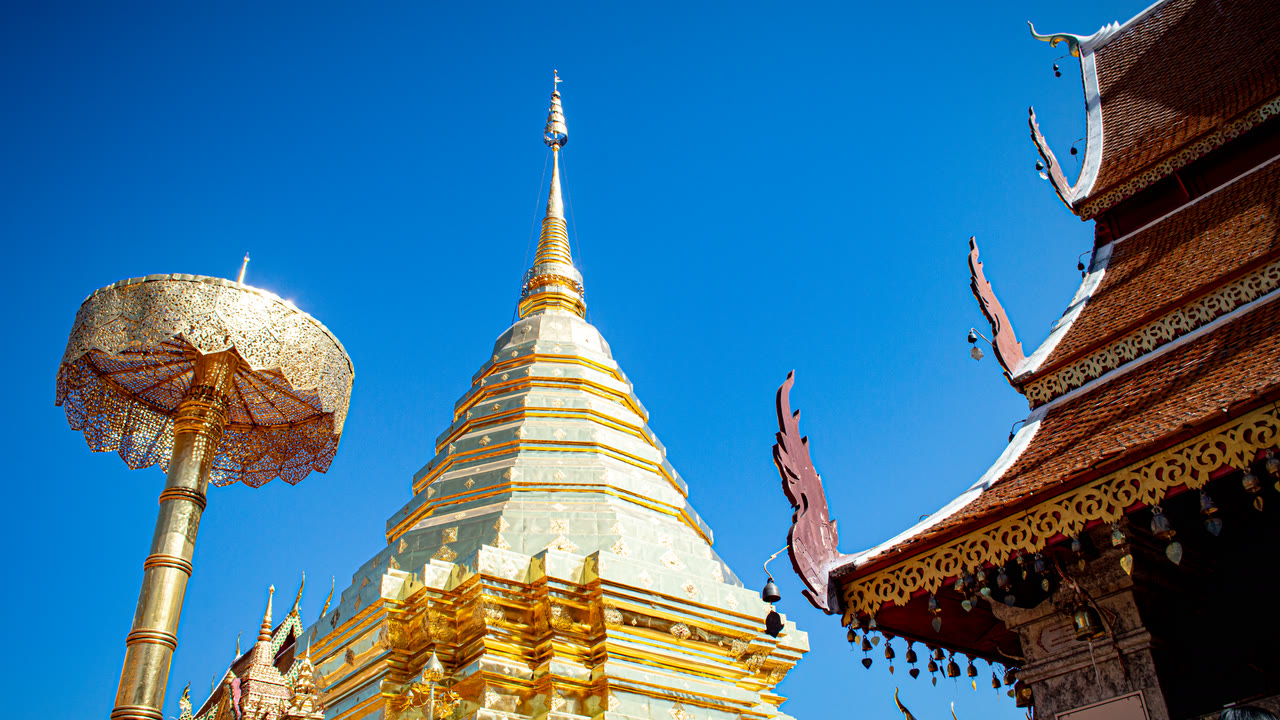
Chiang Mai is the counterweight to Bangkok: smaller, slower, cooler in the evenings and ringed by mountains. The moated Old City is walkable and full of temples, Wat Phra That Doi Suthep on the mountain above is the one most visitors make time for, and northern food from khao soi to sai ua sausage is a reason to come in itself. Three nights is a comfortable minimum.
Northern Thailand has an agricultural burning season, usually around February to April, when air quality around Chiang Mai can deteriorate noticeably. It varies year to year, so check current readings before a long northern stay in late winter.
Phuket
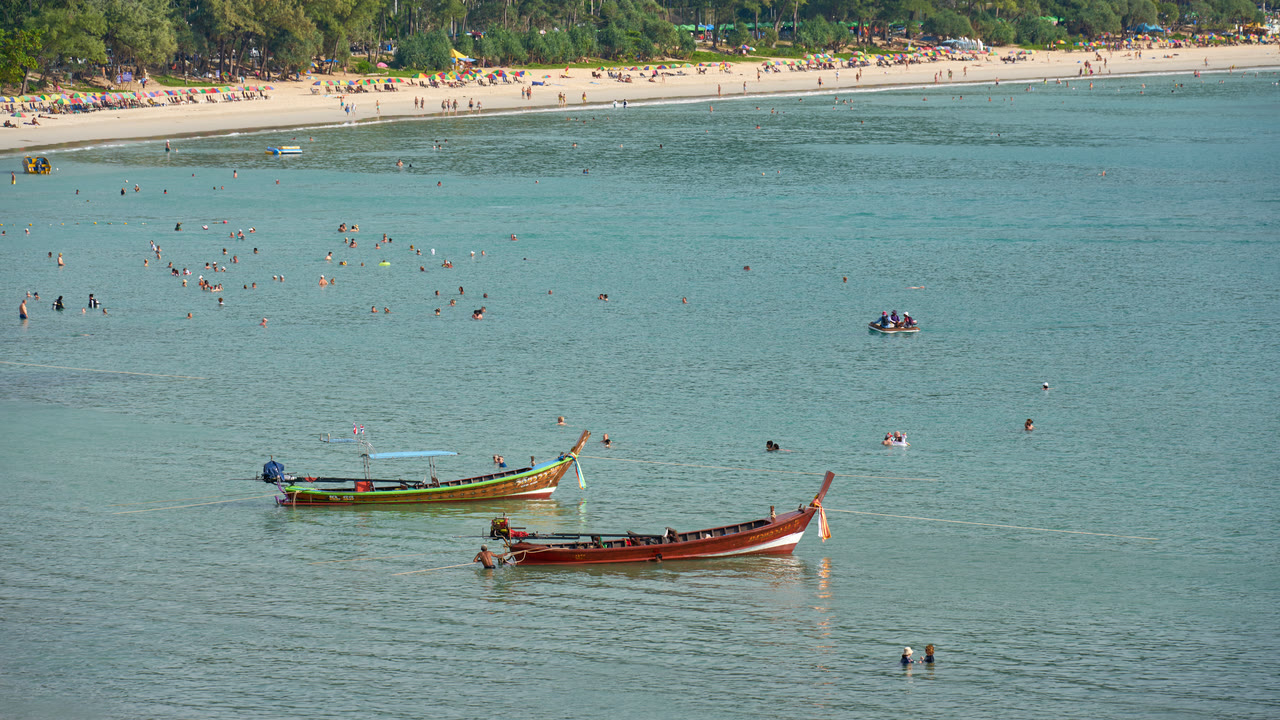
Phuket is not a beach, it is an island of some 540 square kilometres with an international airport, a historic old town and dozens of beaches that produce very different holidays: Patong loud and developed, Kata and Karon calmer with good swimming, Nai Harn and Bang Tao resort-led and quiet. Book the area rather than just the island, because transfers to the southern beaches can take an hour. Phuket (HKT) has the widest choice of flights in the south, and boats to Phi Phi, Phang Nga Bay and the Similan Islands leave from here.
Compare hotel options with Holidair
Krabi
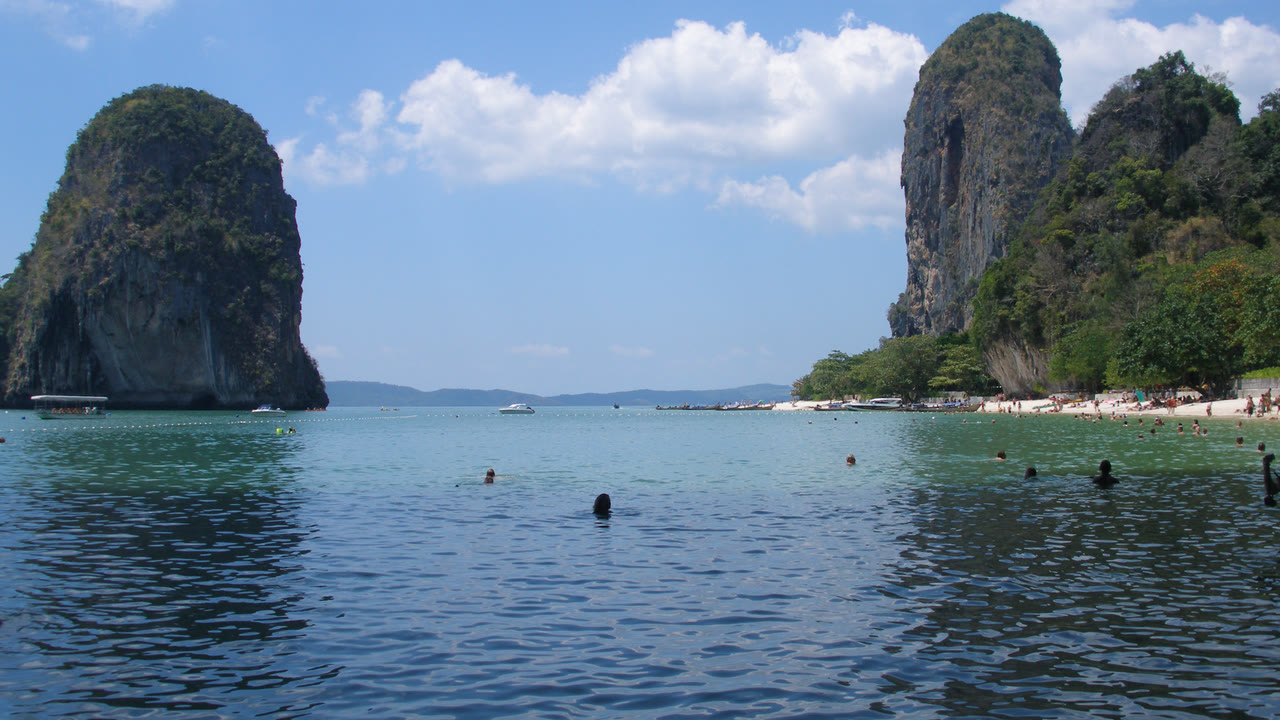
Krabi province, across the bay on the mainland, trades some of Phuket's convenience for better scenery: the limestone karst towers in every photograph of southern Thailand are concentrated here. Ao Nang is the walkable base, Railay is cut off from the road by cliffs and is a well-known climbing spot, and Koh Lanta is two hours south for long flat beaches and almost no nightlife. Krabi (KBV) is strong on domestic routes, thinner on international ones.
Koh Samui
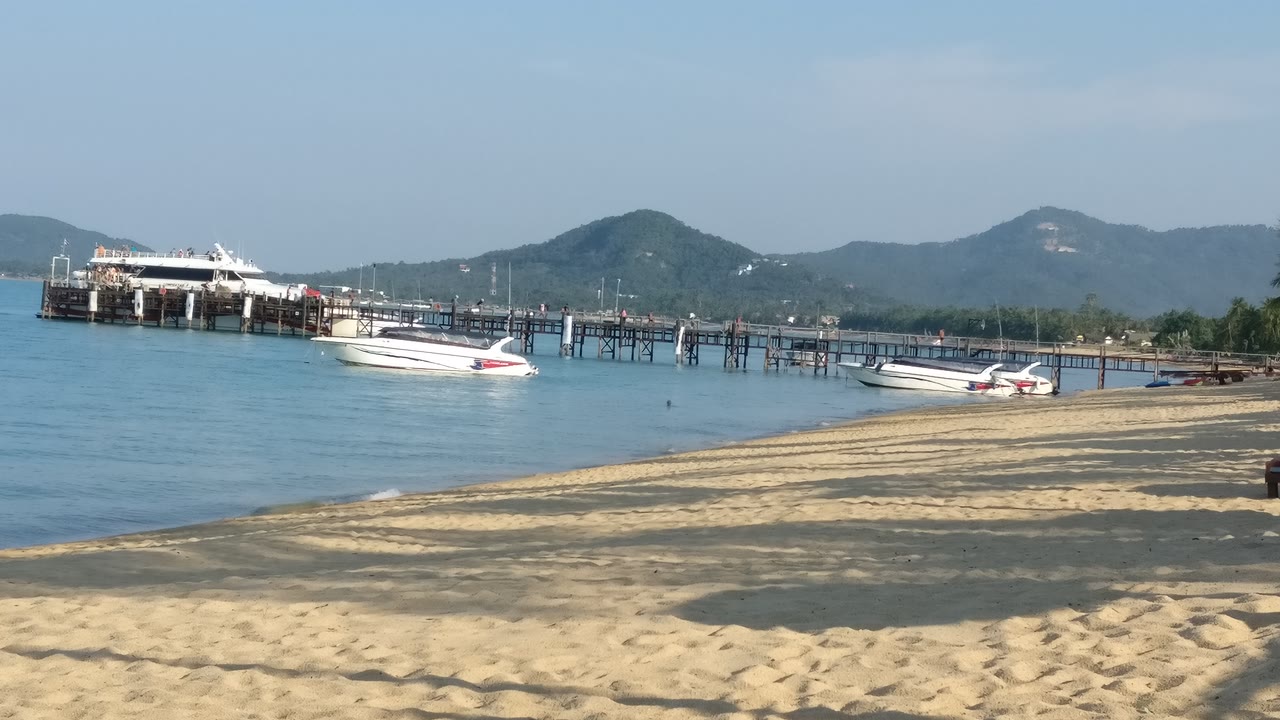
Koh Samui sits on the Gulf coast, which matters more than it sounds: it runs on a different weather cycle from the Andaman islands, so it is the right answer for certain months. Chaweng has the longest beach and most of the nightlife, Bophut is the relaxed middle ground, Mae Nam quieter again. The archipelago is the real draw, with Koh Phangan half an hour away by boat and Koh Tao as the dive-training centre of Thailand. Samui's airport (USM) is usually pricier to fly into; Surat Thani plus a bus and ferry is cheaper and much slower.
Ayutthaya
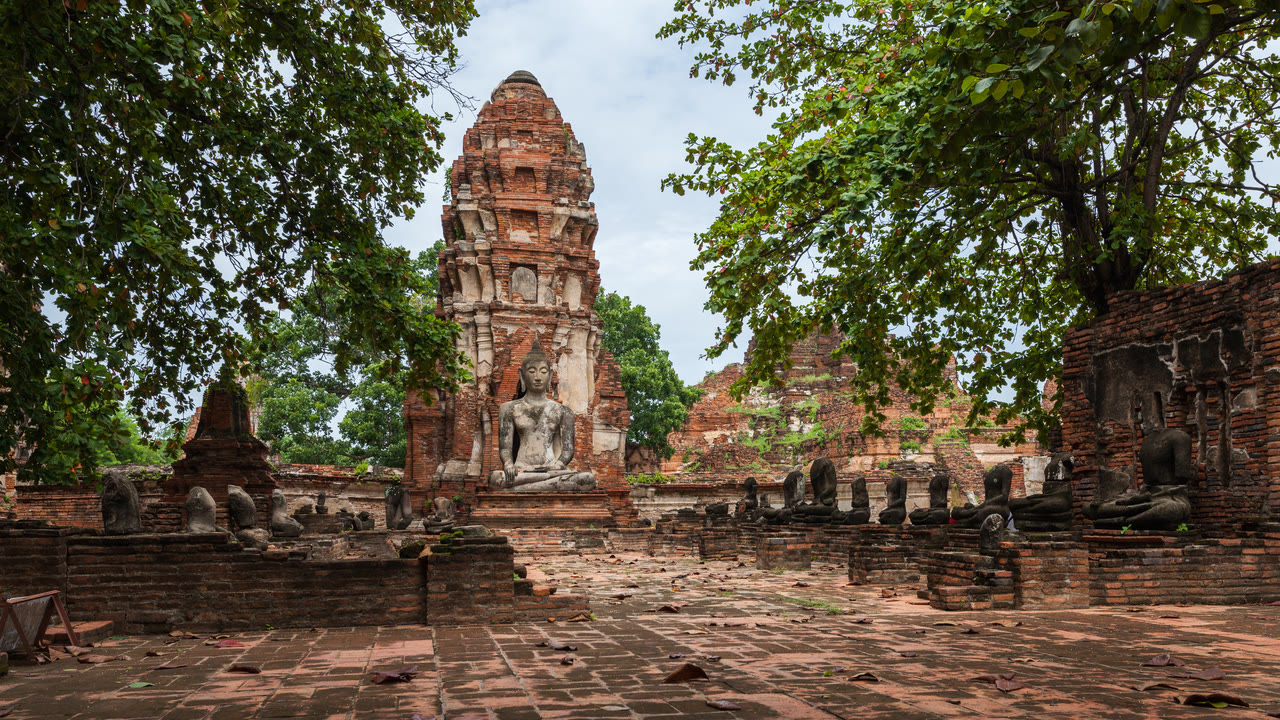
Ayutthaya was the Siamese capital for more than four centuries until its destruction in 1767, and what remains is a UNESCO World Heritage site of brick prangs and Buddha images on a river island 80 kilometres north of Bangkok. Trains take a little over an hour, and a bicycle or a hired tuk-tuk changes how much of the spread-out site you see.
Khao Sok
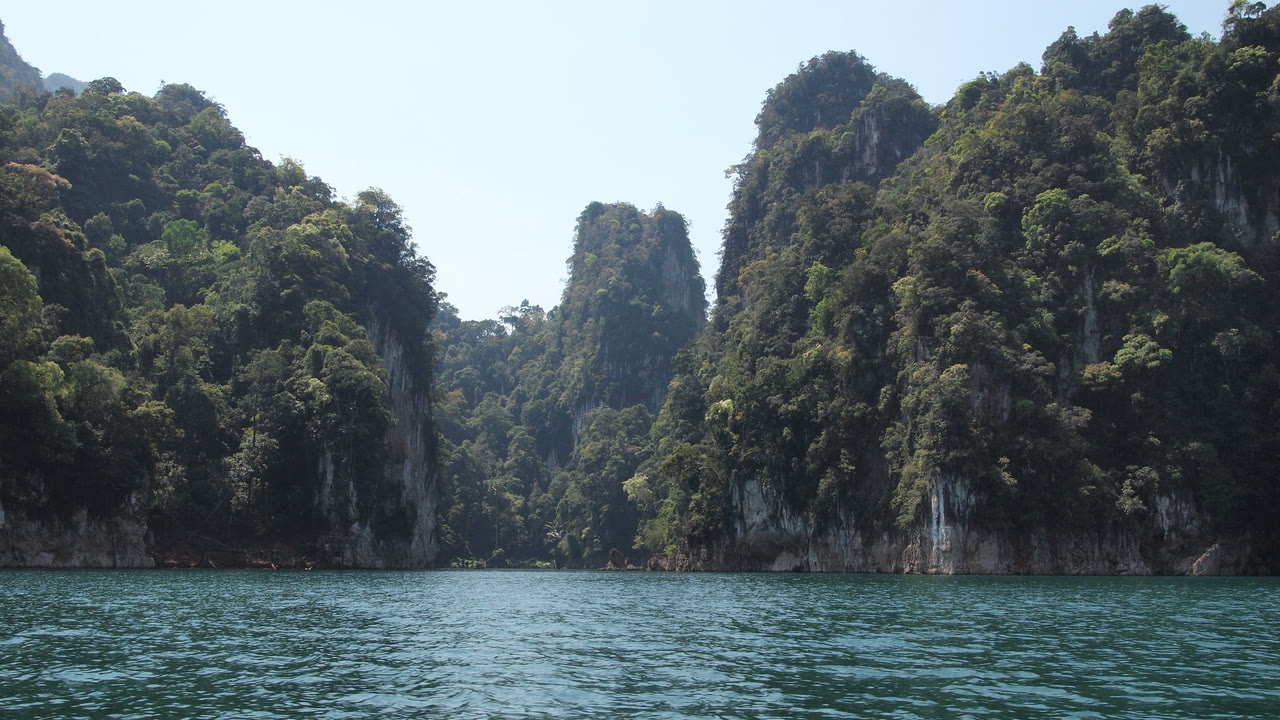
Khao Sok National Park, inland from the Andaman coast, is the counter-programme to a beach holiday: old rainforest and limestone mountains standing in fresh water. Floating raft houses on Cheow Lan Lake are the reason to come, ideally for two nights, with a dawn boat trip when gibbons and hornbills are audible. It is two to three hours by road from Surat Thani, Krabi or Phuket, so it slots neatly between a west-coast beach and a Gulf island. Facilities are simple and raft houses are best booked ahead.
Things to Do in Thailand
Activities work best matched to the place rather than collected as a checklist. A good week has room for one temple morning, one food-led evening, one boat day and one day with nothing booked.
- Temples: Bangkok's riverside cluster, Chiang Mai's Old City, Ayutthaya for ruins.
- Street food and markets: Yaowarat after dark, Chiang Mai's night markets, island morning markets.
- Cooking classes: best in Chiang Mai and Bangkok, usually starting at a market.
- Muay Thai: Bangkok stadiums run regular fight nights, and camps take beginners.
- Water: dive courses on Koh Tao, the Similan Islands seasonally from Phuket, sea kayaking in Phang Nga Bay.
- National parks: Doi Inthanon, Khao Sok, Ang Thong. Check access, as some marine parks close seasonally.
Phuket or Krabi?
They are an hour or two apart, share the same Andaman weather and look similar in photographs, but they deliver different holidays.
| Phuket | Krabi | |
|---|---|---|
| Atmosphere | Developed, always something open | Smaller-scale, earlier evenings |
| Scenery | Good beaches, best views from boats | Limestone cliffs at the beach itself |
| Nightlife | Extensive, from beach bars to Bangla Road | Modest, little late nightlife |
| Hotels and food | Widest range in the south, international dining | Good mid-range and resorts, less variety |
| Airport | HKT: many international routes | KBV: strong domestic, fewer international |
Choose Phuket for hotel and restaurant range, international flights and short trips. Choose Krabi if the scenery is the point, or if you want to climb, kayak and take boats most days. For two weeks, flying into Phuket, moving to Krabi or Koh Lanta by ferry and flying home from Krabi avoids backtracking.
Best Time to Visit Thailand
Thailand does not have one national weather pattern. Bangkok, the central plains and the north run on three seasons: cooler and drier from around November to February, hot from March to May, then a rainy season from about May or June to October. The south needs more care, because its two coasts do not share a season.
| Period | Bangkok and central | Northern Thailand | Andaman coast | Gulf islands |
|---|---|---|---|---|
| Nov to Feb | Driest and most comfortable | Cool mornings, clear skies | Peak season, generally driest | Good, wettest late in the year |
| Mar to May | Hot and humid | Hot, hazy at times | Hot, calm sea | Hot, often settled |
| Jun to Oct | Frequent afternoon rain | Green, wet, fewer visitors | Wettest, rougher seas | Often the driest stretch |
The Andaman coast, meaning Phuket, Krabi, Koh Lanta and Phi Phi, takes the southwest monsoon head-on and is calmest between November and April. The Gulf islands are sheltered from it and are wettest later, typically October to December. So the Andaman side wins in January and February, the Gulf wins in June, July and August.
Rainy season here rarely means all-day rain. It usually means heavy afternoon downpours after dry mornings, and the risk of a washed-out day rather than a washed-out week. These are patterns, not promises, so check marine conditions before booking boat days.
How Long Should You Spend in Thailand?
Long-haul travel eats days at both ends, and internal moves eat more than people expect. A domestic flight is a checkout, a transfer, a check-in, the flight and another transfer, so budget half a day for every move you add.
- 7 days: two bases. Bangkok plus one beach, or Bangkok plus Chiang Mai for temples, food and mountains.
- 10 to 14 days: three bases, such as Bangkok, Chiang Mai and Krabi, or Bangkok, Phuket and Khao Sok. Ayutthaya as a day trip costs nothing in transit.
- 3 weeks: slow down rather than add stops. A week on one island, two nights at Khao Sok, or a region most itineraries skip such as Isaan.
Getting Around Thailand
- Domestic flights: about an hour from Bangkok to Chiang Mai, Phuket, Krabi or Samui. Check which Bangkok airport you fly from, because BKK and DMK are 50 kilometres apart.
- Trains: slow, comfortable and scenic. The Bangkok to Chiang Mai sleeper is an experience in itself.
- Buses and minivans: cheapest between towns. Minivans are quicker and tighter, VIP buses more comfortable than expected.
- Ferries and speedboats: how you reach the islands. Schedules thin out in low season and can be cancelled in rough weather.
- In the cities: Skytrain, metro and river boats beat a taxi at any busy hour, and ride-hailing apps work in the main cities.
The connection rule worth internalising: never put a ferry, a domestic flight and an international flight on the same day on separate tickets. If your international flight leaves Bangkok in the morning, relying on a ferry and a separately booked domestic flight to get you there the same day adds unnecessary risk. Give island departures a buffer night near the airport instead, or book an airport transfer through Holidair.
Staying Connected in Thailand
A working data connection changes the trip more than most gadgets: maps, live transport apps, ride-hailing without haggling, menu translation outside tourist areas, and a way to reach a hotel or boat operator when plans change. Local prepaid SIM cards are cheap and sold in every arrivals hall, at the cost of a queue and swapping out your home SIM. An eSIM does the same job without either.
See Holidair travel eSIM options
What to Eat in Thailand
Thai food is regional in a way that surprises people whose reference point is a Thai restaurant at home. The central plains produced the dishes that travelled internationally, while the north, northeast and south eat differently.
- Pad kra pao: minced meat fried with holy basil and chilli over rice with a fried egg. The everyday lunch and the best test of a small kitchen.
- Som tam: green papaya salad, pounded to order. Say how much chilli you actually want, because the default is not calibrated for visitors.
- Tom yum: hot and sour soup, usually with prawns; tom kha is the gentler coconut-milk version.
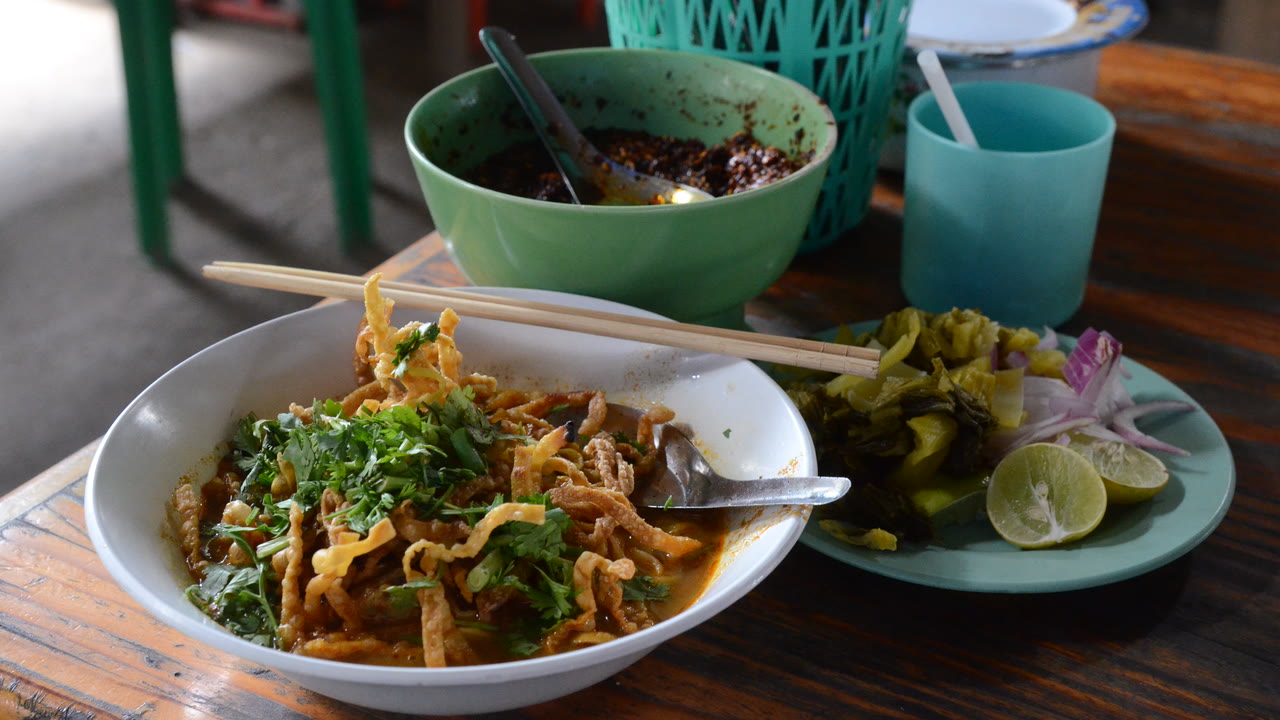
- Khao soi: northern curried noodles, best around Chiang Mai; massaman is the mild southern counterpoint.
- Southern Thai food: the spiciest in the country, built on turmeric, chilli and seafood priced by weight.
Street food is not automatically better or safer than a restaurant, and not automatically worse. The signals are the same everywhere: busy, quick turnover, cooked to order in front of you, and one or two specialities rather than a menu of forty. With a sensitive stomach, ease in rather than starting with raw seafood salads, and stick to bottled or filtered water.
Thailand Travel Tips: Culture and Temple Etiquette
Thailand is relaxed with visitors, but temples and royal sites are not casual spaces, and the rules are taken seriously rather than treated as suggestions.
- Cover shoulders and knees at temples. Major sites such as the Grand Palace enforce it at the entrance.
- Take your shoes off before entering a temple building.
- Buddha images are sacred objects, not backdrops: do not climb on them or point your feet towards them.
- Monks follow their own rules; women should avoid physical contact and hand items over indirectly.
- Beachwear belongs on the beach. Cover up walking into town.
- The Thai monarchy is protected by law and disrespect towards it is a criminal matter.
In practice this is simple: carry a light scarf or long trousers in your day bag, and read the sign at the gate, since individual temples set their own rules.
Is Thailand Expensive?
Thailand works at almost any budget, which is not the same as being cheap. Bangkok and the developed island resorts are the expensive end, while smaller cities and the mainland south are considerably cheaper for the same standard. High season on the Andaman coast can double the price of a hotel room compared with September, and excursions, dive courses and spa programmes are where budgets quietly disappear. Price your own trip for your own dates rather than trusting a daily figure from a blog.
Thailand Digital Arrival Card (TDAC)
The Thailand Digital Arrival Card is an online arrival form submitted to Thai Immigration before you travel, replacing the paper TM6 card. It is a declaration rather than a visa: you submit passport, travel, accommodation and basic health details shortly before arrival, then show the confirmation when you land. The official service is free.
Arrival card rules and the submission window change from time to time. Use only the official Thai Immigration service and check current requirements shortly before you travel, since several commercial sites charge for what is a free government form.
Official service: tdac.immigration.go.th.
Visa and Entry Requirements
Entry requirements depend on your nationality, length of stay, purpose of travel and current Thai policy, which has changed several times in recent years. Many nationalities can enter for tourism without a visa in advance, but the qualifying list and permitted stay are revised periodically, so a duration quoted in a forum post is not a reliable basis for booking.
- Check the current rules for your passport with the Thai Ministry of Foreign Affairs: mfa.go.th.
- Apply through the official Thai e-Visa service if you need a visa in advance: thaievisa.go.th.
- Airlines check passport validity and onward travel at check-in, so keep a return or onward ticket to hand.
Keep the two separate: the arrival card is a declaration everyone submits, while a visa or visa exemption is the permission to enter and stay.
Thailand Travel Guide FAQ
What is the best time to visit Thailand?
November to February for most of the country, with the Gulf islands as the exception: Koh Samui, Koh Phangan and Koh Tao are wettest around October to December and often best between June and September.
How many days do you need in Thailand?
Seven days covers two bases, ten to fourteen days makes three comfortable, and three weeks is better spent slowing down than adding stops.
Is Thailand good for a first trip to Asia?
Yes. Tourism infrastructure is well established, English is widely used in tourist areas, domestic transport is frequent and inexpensive, and accommodation covers every level. The main adjustments are the heat and the distances.
Which Thai island should I choose?
Phuket for facilities and flight connections, Koh Lanta for quiet Andaman beaches, Koh Samui for the Gulf coast with an airport, Koh Tao for diving. Your dates decide the coast before you pick the island.
Do I need a visa or a TDAC for Thailand?
The arrival card applies to foreign nationals arriving in Thailand and is free through the official Thai Immigration service. Whether you also need a visa depends on your nationality, length of stay and purpose, so check the official sources before booking.
Entry rules, transport schedules, park access and prices change. Published August 2026. Verify time-sensitive details with Thai Immigration, the Thai Ministry of Foreign Affairs, the Tourism Authority of Thailand, the Department of National Parks and UNESCO.