Most visitors arrive for the beaches, and the beaches deliver. But Tunisia is also where you can stand in a Roman amphitheatre that seated 35,000 people, buy spices in a medina that has traded for a thousand years, and sleep at the edge of the dunes, all within the same week.
This guide walks through what is genuinely worth your time: the coast, the historic sites, the food, the nightlife, the desert and the quieter corners most itineraries skip. It also covers the practical part, from the best months to travel to how you get between regions.
When to go
Tunisia has a Mediterranean climate on the coast and a desert climate inland, so the same month can feel very different depending on where you are.
| Season | What it feels like | Best for |
|---|---|---|
| March to May | Warm days, cool evenings, countryside still green | Sightseeing, medinas, Roman sites, desert trips |
| June to August | Hot and busy on the coast, very hot inland | Beach holidays, swimming, resorts |
| September to October | Sea still warm, crowds thinning out | Beaches plus sightseeing in one trip |
| November to February | Mild and quiet, some rain, cold desert nights | City breaks, low season prices, hiking |
If you want one trip that covers both swimming and sightseeing, late September and early October are hard to beat. If your plan is centred on the Sahara, aim for spring or autumn and avoid midsummer entirely.
Ramadan moves each year and changes opening hours, restaurant service and the atmosphere in more conservative towns. It is a rewarding time to visit, but check the dates before you book so nothing catches you out.
The beaches
Tunisia has roughly 1,300 kilometres of coastline, and the character changes as you move south. The north is greener and wilder, the central coast is where most of the resorts sit, and the south is warmer for longer.
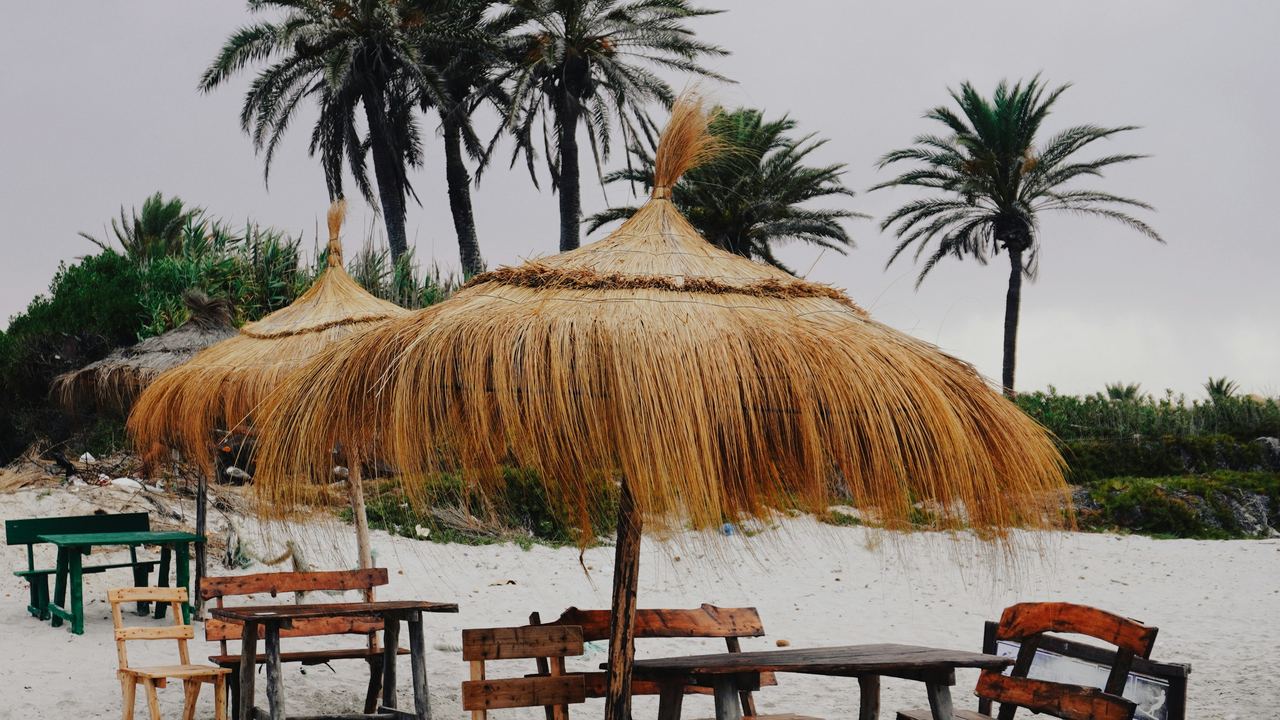
Hammamet and Yasmine Hammamet
The easiest introduction to the Tunisian coast: long sandy beaches, jasmine scented old streets, a small kasbah and a marina district built for evenings out. It suits first trips and families, and it is close enough to Tunis for day trips.
Sousse and Monastir
Sousse pairs a wide beach with a UNESCO listed medina, so you can swim in the morning and walk through a ninth century ribat in the afternoon. Monastir, just down the coast, is quieter, with a striking fortified monastery on the waterfront.
Mahdia
The pick for travellers who want a quieter alternative to the big resort strips. Mahdia is a working fishing town with one of the best beaches in the country, a small peninsula of old lanes and fewer coaches than its neighbours, although the seafront still fills up in July and August.
Djerba
An island of low white houses, palm groves and shallow warm water, with its own culture, its own cooking and one of the oldest synagogues in North Africa at El Ghriba. The season runs longer here than anywhere else in the country.
Tabarka and the north coast
Cork forests running down to red rock coves, coral diving and a Genoese fort on an island. It is the least developed stretch of the coast and the best choice if your idea of a beach holiday includes hills and pine trees.
Find places to stay in Tunisia
History you can walk through
Tunisia carries Carthaginian, Roman, Arab, Ottoman and French layers, often on the same street. UNESCO currently lists ten World Heritage properties in the country, and most of them sit within an easy drive of the coast.
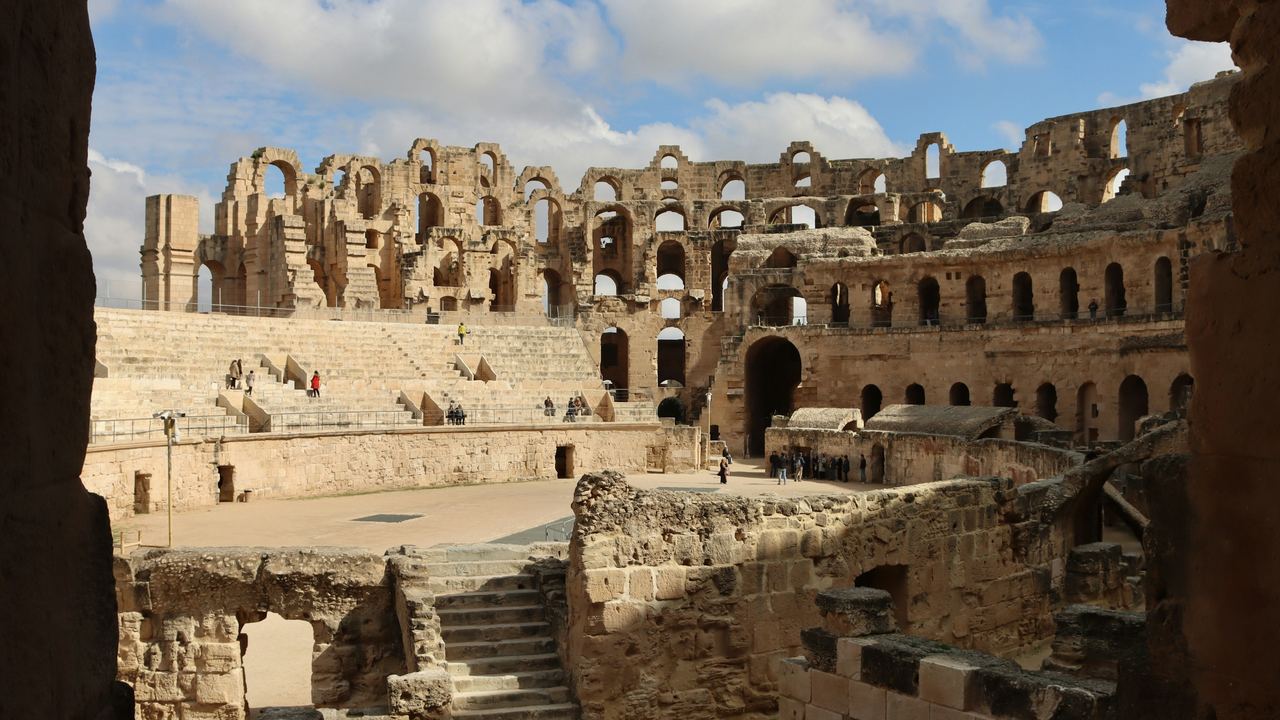
- The amphitheatre at El Jem: a third century arena that held tens of thousands of spectators, standing almost intact in the middle of a modern town. You can walk the tiers and the underground passages.
- Carthage: the Punic and Roman capital spread across a coastal suburb of Tunis, with baths, cisterns, villas and a hilltop museum looking over the bay.
- The medina of Tunis: several hundred monuments inside a still busy old city, including the Zitouna mosque and a set of Ottoman palaces now open as museums.
- The medina of Sousse: an early Islamic town with a ribat and a great mosque built when this was a frontier port.
- Dougga: the best preserved Roman town in North Africa, inland from Tunis, with a capitol, a theatre and a Punic mausoleum on an open hillside.
- Kairouan: the first great city of Islam in the Maghreb, built around the Great Mosque, with cisterns, mausoleums and carpet workshops.
- Kerkuane: a Punic town on the Cap Bon coast that was never rebuilt by the Romans, so the street plan and the bathrooms are still Carthaginian.
- Djerba: the island itself is listed for its scattered settlement pattern of houses, mosques and water cisterns spread across the palm groves.
- Sidi Bou Said: the blue and white village above the Gulf of Tunis, added to the list in 2026.
- Ichkeul National Park: a lake and wetland north of Tunis that is a major stop for wintering waterbirds.
El Jem and Dougga both work as day trips, but they reward an early start. Arrive before the middle of the day and you get the site with the light behind you and the tour groups still on the road.
Museums worth the detour
Tunisia's mosaics are among the finest anywhere, and the best of them are indoors. Four museums cover most of what you would want to see.
- Bardo National Museum, Tunis: the country's flagship collection of Roman mosaics and Punic finds, in a former Ottoman palace. It reopened in 2023, and access to individual galleries can still change, so check current official information before crossing town for a specific room.
- Sousse Archaeological Museum: a strong mosaic collection inside the kasbah, easy to combine with the medina in one morning.
- El Jem Archaeological Museum: mosaics and a reconstructed Roman villa a short walk from the amphitheatre, and usually much quieter.
- Guellala Museum, Djerba: island crafts, pottery, dress and customs, useful context if you are staying on Djerba for a week.
Museum opening days and ticket arrangements change with the season and with restoration work. Confirm the current details on the day rather than relying on a printed itinerary.
What to eat
Tunisian food is the most chilli forward cooking in North Africa, built on olive oil, tomatoes, seafood and harissa. It is also cheap by European standards, and best eaten where locals eat rather than at the hotel buffet.
- Brik: a paper thin pastry parcel with egg, tuna, parsley and capers, fried and eaten immediately. Order it as a starter and mind the yolk.
- Couscous: the Friday dish, most often with fish on the coast and lamb inland. Tunisian versions are spicier than Moroccan ones.
- Lablabi: a bowl of chickpeas, broken bread, cumin, harissa, olive oil and a soft egg. A workman's breakfast and one of the best things in the country.
- Mechouia: grilled peppers and tomatoes chopped into a smoky salad, usually with tuna and egg on top.
- Grilled fish: on the coast, choose it by weight from the ice and have it grilled plain with lemon and harissa on the side.
- Makroudh and bambalouni: semolina and date pastries, and hot sugared doughnuts sold on the street in the evening.
- Mint tea with pine nuts, and Tunisian espresso, which is strong and served fast.
Harissa arrives on almost every table. It varies a lot from one kitchen to the next, so taste before you spread. If you like it, tins and jars from the market travel home well.
Restaurants worth checking
These are established places rather than a definitive ranking, and they cover different moods: a courtyard dinner in the old city, a fish lunch by the water, a terrace with a view.
- Dar El Jeld, Tunis medina: Tunisian cooking in a restored townhouse, the classic special occasion dinner in the capital.
- Le Golfe, La Marsa: a seafood address on the northern Tunis coast, named Best Restaurant in Tunisia 2026 by Middle East & North Africa's 50 Best Restaurants. That is one organisation's assessment, not a promise that it is the right restaurant for every traveller.
- Dar Zarrouk, Sidi Bou Said: terrace tables looking down over the gulf, best booked for the early evening.
- Le Barberousse, Hammamet: a long standing terrace above the old town and the sea, easy to reach from the resort strip.
- Restaurant Haroun, Houmt Souk, Djerba: grilled fish by the fishing port, the standard first dinner on the island.
Opening days, menus, prices, dress expectations and reservation policies change. Check the restaurant's current official website or social channel before you go, and book ahead for terrace tables in high season.
Medinas and shopping
A Tunisian medina is not a museum. People live, trade and eat in them, which is what makes them worth several hours rather than one photo stop.
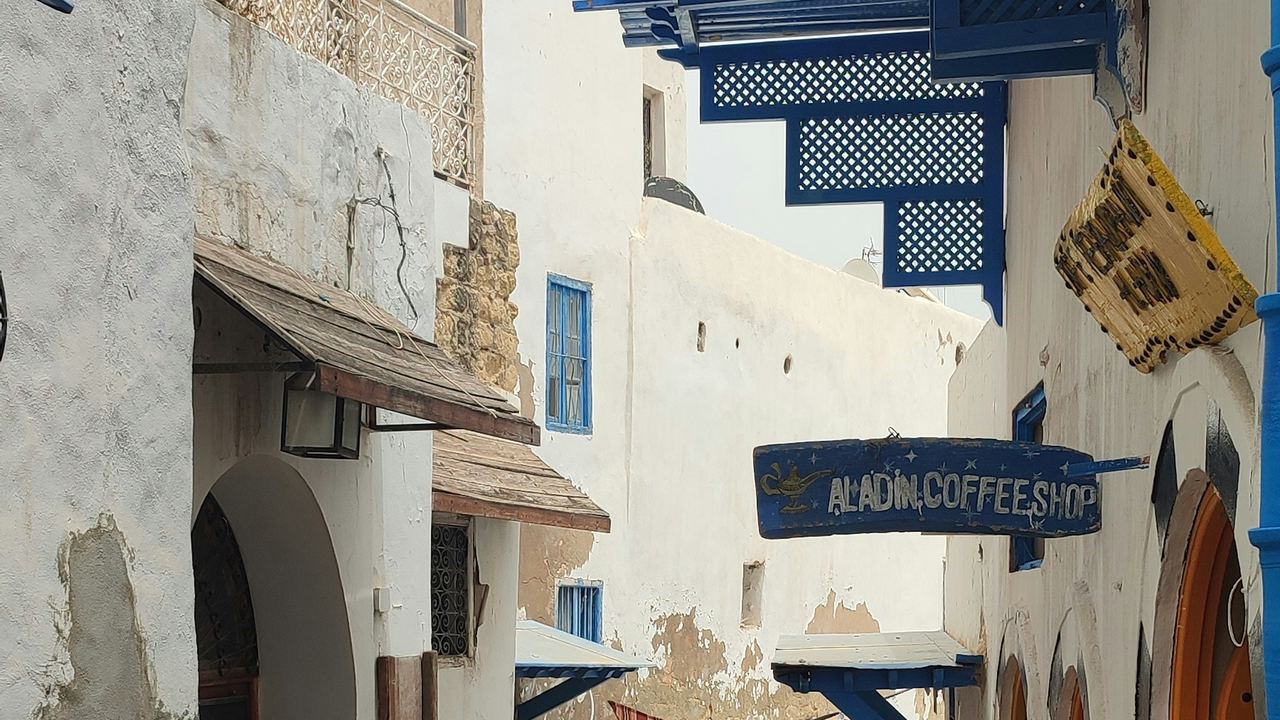
Tunis has the largest and most layered medina, Sousse the most compact, Sfax the least touristed, and Kairouan the best carpets. Go early for quiet lanes, or late afternoon for the busiest and most sociable version.
- Worth buying: olive oil, dates, harissa, ceramics from Nabeul, woven blankets, birdcages from Sidi Bou Said and kilims from Kairouan.
- Bargaining is normal in the souks and not in fixed price shops. Stay friendly, name a real number and be ready to walk away.
- Ask before photographing people or their stalls. A short conversation usually gets you a better picture anyway.
- Carry small notes. Many stalls cannot change a large bill early in the day.
Nightlife, rooftops and Tunisian wine
Tunisia is not a party destination in the Ibiza sense. Alcohol is served in licensed restaurants, hotels and bars, and the widest choice of late night venues is generally around Gammarth, La Marsa and the northern Tunis coast.
- Gammarth, La Marsa and Sidi Bou Said: the broadest mix of bars, wine lists, rooftop cafes and clubs, busiest at the weekend.
- Hammamet, Yasmine Hammamet and Sousse or Port El Kantaoui: more seasonal resort nightlife, at its liveliest in July and August and much quieter out of season.
- Djerba: usually hotel lounges, beach venues and programmed events rather than a club scene.
- Everywhere else, the evening is about cafes: mint tea, shisha, football on a screen and conversation that runs late.
Event and club names change frequently, so a printed list goes out of date fast. Check the venue's own page on the day you plan to go for the current event, opening hours, entry policy, identification requirements, dress code, whether a reservation is needed and how you will get back.
For a terrace with a view, two examples we checked in August 2026 are L'Onzieme Bar at the Tunis Marriott and The Creek Lounge at Four Seasons Hotel Tunis. Treat them as examples rather than permanent recommendations: weather, wind, private events and seasonality all affect whether a terrace is open.
In summer, festivals in Carthage, Hammamet and Dougga put concerts and theatre inside Roman venues, which is one of the best evenings the country offers.
Tunisian wine tasting
Tunisia has a real wine industry, concentrated around Cap Bon, and rose and light reds from there turn up on most licensed wine lists. Domaine Neferis and its Kurubis label are among the names to look for.
- Vineyard visits and tastings need to be arranged and confirmed in advance. Do not count on walk-in access.
- Alcohol is served in licensed venues, and availability can be more limited during Ramadan and around local holidays.
- Respect local customs, particularly away from the resorts and in the medinas.
- Keep your drink in sight, and never drink and drive. Arrange a taxi or a hotel transfer for the way back.
Dress is relaxed on the coast and more conservative inland and in the medinas. Covered shoulders and knees are appreciated away from the beach, and required in mosques.
Boat trips and water activities
Most of the coast has a season for getting out on the water, roughly late spring to early autumn, with the calmest conditions in the mornings.
- Boat and catamaran trips: seasonal day sailings around Hammamet, from the marina at Port El Kantaoui and along the Djerba coast, usually with a swimming stop and lunch.
- Snorkelling: best where the coast is rocky rather than sandy, so the north and parts of Djerba.
- Scuba diving: Tabarka on the north coast is the established centre, with rock reefs, coral and drop-offs; there are smaller schools in Hammamet, Monastir and Djerba.
- Sailing, windsurfing and kitesurfing: the marinas rent equipment and run courses, and the shallow lagoons around Djerba suit beginners.
- Kayaking and paddleboarding: calm morning water in bays and lagoons, often bookable by the hour at the hotel beach.
- Short fishing excursions: available from several harbours where local boats offer them, typically a half day trip.
Book with an established operator, read current reviews, and check the weather and sea conditions for the day. Confirm that life jackets are provided, do not board an overcrowded boat, and treat any promise of dolphin or wildlife sightings with scepticism, because nobody can guarantee them.
The Sahara and the south
The south offers desert experiences rather than a classic wildlife safari: dunes, oases, ksour and very big skies. From the central coast you can reach the edge of the Sahara in a day's driving, and the standard route strings together several things worth seeing on the way.
- Douz: the usual starting point for dune trips and desert camps, on the edge of the Grand Erg Oriental.
- Chott el Jerid: a vast salt lake that shimmers and disappears in the heat, crossed by a single straight road.
- Tozeur and the mountain oases of Chebika, Tamerza and Mides: palm groves, gorges and waterfalls against bare rock.
- Matmata: underground pit houses carved into the hills, some still lived in and one used as a film set.
- Ksar Ouled Soltane and the other ksour: honeycombed granary cells built by Berber communities, best in late light.
- Ksar Ghilane: the furthest of the usual stops, a desert camp beyond the ksour used as a base for dune trips and stargazing.
What people actually do down there: guided 4x4 excursions, dune walking, stargazing, an overnight desert camp, a short camel ride and, at some bases, quad or buggy tours.
Allow at least two days from the main coastal resorts. A single day trip from a beach hotel means most of your time on the road, and the desert is at its best at dawn and dusk, exactly when a day tour has you in transit.
- Use a reputable, properly licensed operator, and confirm exactly what transport and accommodation are included before you pay.
- Check the current official travel advice for the areas you plan to visit, especially in the far south.
- Quad and buggy operators should provide helmets and a proper safety briefing. Skip it if they do not.
- Avoid strenuous activity in extreme heat, carry more water than you think you need, and remember that desert nights are cold even after hot days.
- Use local guides on unfamiliar remote routes, and expect a proper vehicle and a driver who knows the terrain.
For camel and horse activities, look at the animals before you agree. They should have water, shade, rest between rides and equipment that fits. Decline the activity if an animal looks injured, exhausted or overloaded, and say why.
Visit the real Star Wars filming locations in Tunisia
Southern Tunisia stood in for the fictional desert planet Tatooine in the original Star Wars film and again in the prequels. Some locations are natural landscapes, some are traditional buildings that were used as interiors, and one is a film set built for the purpose in the desert. They are scattered across the south rather than gathered in one place, so a visit is a route rather than a single stop.
- Mos Espa, near Nefta and Tozeur: a set built in the desert for the prequel films. Parts of it still stand among the dunes.
- Ong Jmal, near Nefta: the "camel's neck" rock formation and the surrounding desert, used for Tatooine scenes.
- Hotel Sidi Driss in Matmata: a traditional underground dwelling used as the interior of the Lars family homestead.
- Chott el Jerid: the salt lake landscape associated with the exterior of the Lars homestead.
- Sidi Bouhlel: a canyon widely known as Star Wars Canyon, after the scenes filmed in it.
- Ksar Hadada: a fortified granary used for parts of the Mos Espa slave quarter in The Phantom Menace.
- Ajim on Djerba: buildings and coastal spots around the town were used for exteriors representing the area around Mos Eisley, including the house used as Obi-Wan Kenobi's home.
The southern town of Tataouine is closely associated with the name Tatooine, and it is the gateway to a landscape of hilltop ksour. That association does not mean every ksar in the area appeared on screen, and sources disagree about some of them, Ksar Ouled Soltane among them. It is a remarkable historic granary and worth the detour on its own terms.
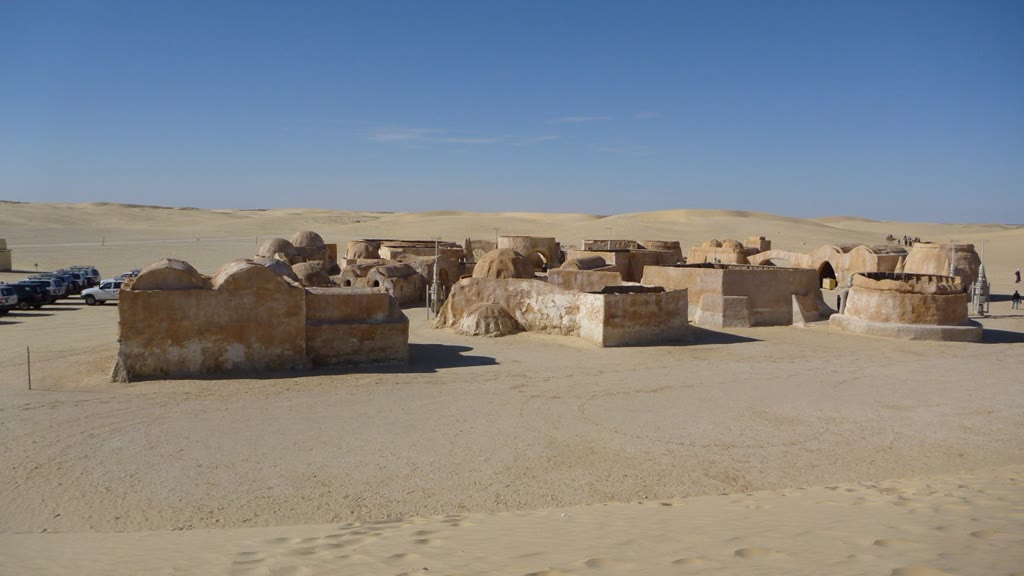
How to plan it: Tozeur or Nefta is the best base for Mos Espa, Ong Jmal, Chott el Jerid and Sidi Bouhlel. Matmata pairs Hotel Sidi Driss with the pit houses and the landscapes around it. Djerba is a practical starting point for Ajim and for excursions towards the Tataouine region.
- A well maintained 4x4 with an experienced local driver or guide may be necessary for the remote desert locations.
- Confirm current access and road conditions locally before you set out, because both change.
- The remaining sets are exposed to wind, sand and erosion, so their condition varies from year to year and they will not look exactly as they did on film.
- Do not climb on fragile structures, take material away or damage set pieces.
- Carry water, sun protection and footwear you can walk in on sand and rock.
- Avoid remote desert travel during extreme heat, and follow the current official travel advice.
Lesser-known corners
If you have been to the resorts, or you simply want places that see fewer coaches, start here. How quiet they feel still depends on the season and the day.
- Bizerte: an old Andalusian style port with a fishing harbour, a kasbah and beaches that are often less visited than the resort strips further south.
- Kerkennah Islands: flat, low-key islands off Sfax with palm fringed water, octopus fishing and little development.
- Takrouna: a Berber village on a rock outcrop with a view over the Sahel plain.
- Zaghouan and the Roman water temple: mountain air, cherry orchards and the spring that once supplied Carthage.
- Sejnane: a village in the north where women still make hand shaped, hand painted pottery in a tradition recognised by UNESCO.
- Ghar el Melh: lagoon farming on sand, Ottoman forts and a small harbour that has kept its old shape.
Getting around
Distances look small on a map, but coastal roads are slow and the country is long. Plan around the region you are based in rather than trying to see everything from one hotel.
| Option | Good for | Worth knowing |
|---|---|---|
| Private transfer | Airport to hotel, late arrivals, families | Price agreed before you travel |
| Louage shared minibus | Town to town on a budget | Leaves when full, cash only, no timetable |
| Train | Tunis to Sousse, Monastir and Sfax | Comfortable on the main line, slower elsewhere |
| Rental car | Dougga, the north coast, the oases | City driving is assertive, parking is tight |
| Taxi | Short city hops | Insist on the meter, agree a price for longer runs |
| Domestic flight | Tunis to Djerba | Saves most of a day compared with driving |
If you land in the evening or travel with children and luggage, a transfer booked in advance removes the one part of the trip that most often goes wrong.
Book an airport transfer in Tunisia
Practical things worth sorting first
- Money: the Tunisian dinar cannot legally be taken out of the country, so change what you need and spend it before you fly. Cards work in hotels and larger shops, cash everywhere else.
- Language: Arabic is the official language and French is widely spoken. English is common in resorts and less so inland.
- Connectivity: Tunisia is outside the EU and the EEA, so EU roaming rules do not apply. Check your operator's prices or arrange a travel eSIM before departure.
- Water: drink bottled water, which is cheap and sold everywhere.
- Tipping: rounding up and a small note for good service is normal rather than expected.
- Entry rules: they depend on your nationality and can change. Confirm the current requirements for your own passport before you book.
A week that works
One realistic way to combine the coast with the rest of the country, based on a central coast hotel:
- Days one and two: settle in, beach, and the medina in the late afternoon.
- Day three: El Jem early, then Kairouan or back for a swim.
- Day four: Tunis, with Carthage, Sidi Bou Said and the Bardo Museum.
- Days five and six: south to Tozeur or Douz for a night in the desert.
- Day seven: back to the coast for the last swim and a fish dinner by the harbour.
With ten days you can add Djerba or the north coast without rushing. With five, pick either the desert or Tunis, not both.
When you are ready to price it up, compare a few airports and dates side by side. Tunis, Enfidha, Monastir and Djerba serve different parts of the country, and the cheapest flight is not always the shortest trip.
If a flight to or from Tunisia is delayed by several hours, cancelled or overbooked, you may be entitled to compensation depending on the airline and the route. Our flight compensation page explains how a claim works.
Holidair compares travel options and redirects you to the airline or travel provider you choose. Holidair does not issue flight tickets and does not receive payment for flight bookings.
Frequently asked questions
How many days do you need in Tunisia?
A week is enough for one stretch of coast plus two or three excursions. Ten days lets you add the desert or Djerba at a comfortable pace. Long weekends work well for Tunis, Carthage and Sidi Bou Said on their own.
What is Tunisia best known for?
Mediterranean beaches, the ruins of Carthage, the amphitheatre at El Jem, its medinas and souks, harissa and Tunisian cooking, and easy access to the Sahara.
Is Tunisia good for a beach holiday with children?
Yes. Hammamet, Sousse, Monastir and Djerba have shallow, sandy beaches and large family hotels, and travel times from the nearest airports are short. Djerba and Mahdia are the calmest of the four.
Can you visit the desert from a beach hotel?
You can, but the drive is long. Douz and Tozeur are several hours from the central coast, so plan at least one overnight stay rather than a single very long day.
What should you wear in Tunisia?
Beachwear on the beach and at the pool, and covered shoulders and knees in medinas, villages and religious sites. Evenings are relaxed, and a light layer is useful outside high summer.
Which airport should you fly into?
Tunis Carthage for Tunis and the north, Enfidha for Hammamet, Monastir for Sousse, Monastir and Mahdia, and Djerba Zarzis for the island and the south.
Where can you visit Star Wars filming locations in Tunisia?
Several filming locations are spread across southern Tunisia. The largest concentration is around Tozeur and Nefta, including Mos Espa, Ong Jmal, Chott el Jerid and Sidi Bouhlel. Other recognisable locations include Hotel Sidi Driss in Matmata, Ksar Hadada and sites around Ajim on Djerba. Because the locations are widely separated, a guided excursion or a carefully planned route is usually the easiest option.
Opening hours, routes, prices and entry rules change. This guide was published in August 2026. Check current information before you book and travel.